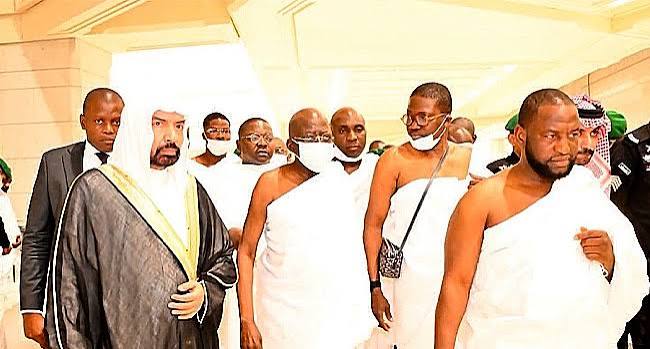

Alwan Hassan discusses ministers, corruption and Tinubu’s spending approach.
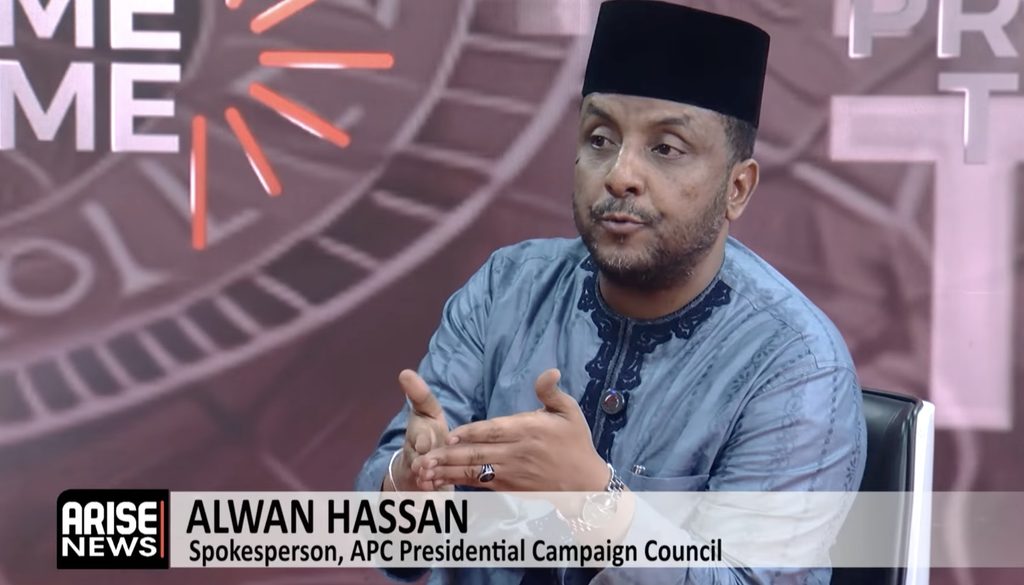
Alwan Hassan on Ministers: APC Spokesperson Defends Tinubu’s Spending Approach
Alwan Hassan on ministers, alleged corruption and government spending became a major talking point during an interview with Charles on Arise TV, where the APC spokesperson defended President Bola Tinubu’s direct involvement in managing government expenditure.
Hassan argued that some ministers focus on recovering the money they allegedly spent securing political appointments, raising concerns about corruption and accountability in public office. He also praised Tinubu’s hands-on approach to government spending, suggesting that the president’s direct oversight of revenue and expenditure was a deliberate policy choice.
During the interview, Hassan made a sweeping claim about the conduct of ministers in Nigeria, saying that many of the individuals arrested for fraud after successive administrations had been ministers.
“The biggest fraudulent people you arrest after every government are ministers,” Hassan said.
His remarks touched on several issues, including ministerial appointments, budget implementation, public spending and the responsibility of government officials to account for public funds.
Alwan Hassan Defends Tinubu’s Direct Control of Government Spending
Hassan expressed support for Tinubu’s direct involvement in expenditure decisions, arguing that the president had personally taken responsibility for functions that ministers would ordinarily perform within their respective ministries.
He questioned why ministers needed to control budgetary funds when the president could oversee the expenditure of government revenue directly.
“The way Asiwaju is hands-on on the expenditure of our revenue is fantastic, and I love it,” Hassan said.
The APC spokesperson described the approach as a conscious policy, suggesting that the administration’s handling of government expenditure was intentional rather than an indication of poor planning.
His position raises questions about the balance between presidential oversight and the responsibilities assigned to ministers under Nigeria’s system of government.
While direct oversight can be presented as a way to strengthen control over public expenditure, the effectiveness of such an arrangement depends on transparent procedures, clear responsibilities and mechanisms for holding public officials accountable.
APC Spokesperson Alleges Ministers Spend Money to Secure Appointments
Hassan also alleged that some individuals spend substantial amounts of money to secure ministerial appointments and subsequently seek to recover those expenses after entering government.
“The first thing they think of is how to recoup that money,” he said, referring to ministers he accused of paying to obtain appointments.
The allegation suggests a possible connection between the pursuit of political office and attempts to recover personal financial investments through public positions. However, Hassan did not identify specific ministers or provide evidence during the quoted remarks to substantiate the allegation.
His comments should therefore be understood as allegations made during a television interview, rather than established findings of criminal wrongdoing against ministers generally.
Hassan further argued that the problem was not exclusive to the APC. When the discussion turned to whether his comments amounted to a criticism of ministers appointed by the ruling party, he maintained that he was speaking about a broader problem that existed before the APC came to power.
Hassan Raises Questions About Budget Funding
Another issue raised during the interview was the relationship between budget approval and the actual release of funds for government programmes.
Hassan described the decision to approve a budget without fully funding it as a conscious policy. He contrasted this approach with Tinubu’s direct involvement in expenditure decisions, which he praised.
His remarks bring attention to the importance of budget implementation in Nigeria. Although an approved budget sets out spending plans and allocations, the delivery of projects and public services also depends on the availability and release of funds, financial controls and effective monitoring.
For ministries and government agencies, these processes affect their ability to implement programmes, meet obligations and deliver services to citizens.
However, Hassan’s comments alone do not establish how funding decisions are made across the federal government or demonstrate the extent to which individual ministries receive their approved allocations.
Debate Over Ministerial Accountability and Corruption
The interview has brought together several important questions about the management of public resources: how ministers are appointed, how government expenditure is supervised and what safeguards exist to prevent the misuse of public funds.
Hassan’s allegations also highlight the need to distinguish between political claims and evidence-based findings. Accusations of fraud against public officials require credible evidence and appropriate investigation before criminal responsibility can be established.
Ultimately, the issues raised during the interview concern more than the relationship between the president and his ministers. They also concern the transparency of government spending, the implementation of approved budgets and the mechanisms through which public officials are held accountable.
Hassan defended Tinubu’s approach and criticised what he described as a pattern of corruption among ministers across successive administrations. His remarks, however, did not identify specific officials or establish that the allegations applied to all ministers.
The comments provide an opportunity for further scrutiny of public expenditure and ministerial accountability, particularly regarding how government institutions ensure that public funds are used for their intended purposes.
About the Author