

The Federal Ministry of Education's TVET initiative provides practical vocational training and financial support to eligible Nigerians.
FG TVET Programme 2026: The Federal Government, through the Federal Ministry of Education (FME), is providing Nigerians with opportunities to acquire practical and vocational skills through its Technical and Vocational Education and Training (TVET) initiative.
The programme is designed to equip participants with industry-relevant skills, improve employability and encourage entrepreneurship through practical training in different sectors of the economy.
The initiative targets young Nigerians, including job seekers, school leavers, fresh graduates and individuals with little or no formal education who want to develop technical skills for employment or self-employment.
According to the programme’s official portal, eligible participants can access tuition-free training, monthly financial support, recognised certification and post-training assistance, including starter packs for selected trades.
The programme offers two major training pathways: the Short-Term Certificate (STC) programme and the Vocational Education and Innovation (VEI) programme.
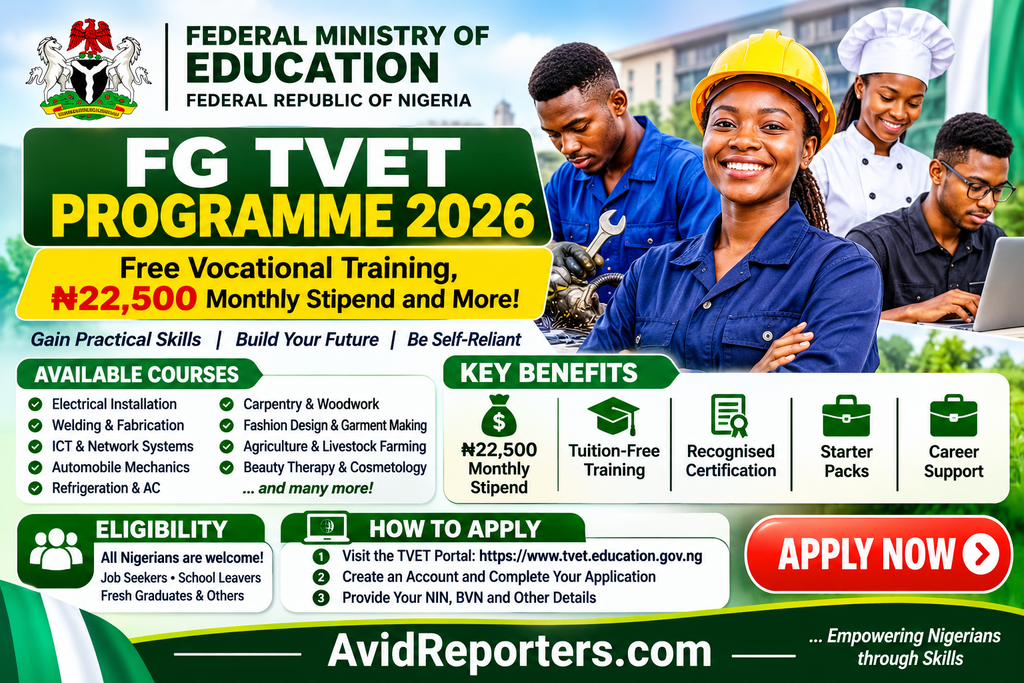
Overview of the FG TVET Programme
The Federal Ministry of Education’s TVET initiative is a national skills development programme aimed at addressing skills shortages and preparing Nigerians for employment opportunities in different industries.
Training is delivered through approved vocational institutions and training centres across the country.
The programme has two principal tracks:
1. Short-Term Certificate (STC) Programme
This track runs for six months and is designed primarily for beginners, school leavers and individuals without formal educational qualifications who want to acquire practical vocational skills.
Applicants are generally required to provide a valid National Identification Number (NIN) and Bank Verification Number (BVN).
2. Vocational Education and Innovation (VEI) Programme
The VEI track runs for one year and is designed for individuals with previous educational, vocational or informal training experience who want to improve and formalise their skills.
Applicants may be required to provide evidence of prior learning, such as a First School Leaving Certificate, apprenticeship experience or certificates from recognised non-formal training programmes.
Available Training Courses Under the FG TVET Programme
The initiative covers several technical and vocational fields, allowing applicants to select training areas based on their interests and career objectives.
Available courses listed on the official programme portal include:
Construction and Building Trades
- Electrical Installation
- Welding and Fabrication
- Painting, Decoration and Interior Finishing
- Floor Cladding, Tiling and Interlocking
- Bricklaying, Blocklaying and Concreting
- Plumbing and Pipe-fitting
- Carpentry and Woodwork
- Furniture Making and Upholstery
- Blacksmithing
Information Technology and Digital Skills
- Network System Installation
- Computer Hardware and GSM Repairs
- Social Media Communications
- Creative Media and Digital Production
Automotive and Technical Services
- Automobile Mechanics
- Auto-body Works
- Motorcycle and Tricycle Repair
- Refrigeration and Air Conditioning
- Vulcanising and Tyre Repair
- Automobile CNG Conversion and Maintenance
Agriculture and Related Skills
- Mechanised Agriculture
- Livestock Farming
- Poultry Production
- Beekeeping and Animal Husbandry
Fashion, Beauty and Other Vocational Skills
- Fashion Design and Garment Making
- Beauty Therapy and Cosmetology
- Hospitality Training
Course availability may vary between accredited training centres. Applicants should confirm that their preferred course is available at their selected institution before completing registration.
Benefits of the FG TVET Programme
Successful participants are expected to benefit from several forms of support throughout and after their training.
Key benefits include:
1. Monthly Stipend
Participants are entitled to a monthly stipend of ₦22,500 throughout the training period, subject to programme requirements and attendance verification.
2. Tuition-Free Training
The Federal Government provides funding for tuition, allowing selected participants to receive vocational training without paying the normal training fees.
3. Recognised Certification
Participants who successfully complete their training are eligible for nationally recognised certification.
4. Starter Packs
The programme provides starter packs for eligible graduates to support the establishment of small businesses and independent vocational practices.
5. Practical Skills Development
Training focuses on hands-on experience, helping participants develop technical abilities relevant to their selected trades.
6. Employment and Entrepreneurship Support
The initiative also provides career guidance and job-placement support. However, participation does not guarantee automatic employment after graduation.
ALSO READ: MTN Global Graduate Development Programme 2027: Requirements and How to Apply
FG TVET Programme Eligibility Requirements
The programme is designed to accommodate Nigerians with different educational and vocational backgrounds.
The Short-Term Certificate track is suitable for beginners, including individuals without formal educational qualifications.
The VEI track is intended for applicants with previous educational or informal training experience who want to improve their existing skills.
Applicants should prepare the following basic requirements:
- Valid National Identification Number (NIN).
- Valid Bank Verification Number (BVN).
- Active mobile phone number.
- Functional email address.
For the VEI programme, applicants may also need one of the following:
- First School Leaving Certificate (FSLC).
- Evidence of apprenticeship or informal vocational training.
- Certificate from a non-formal education programme, including relevant community or NGO training.
Applicants should check the official portal for the specific documentation required for their selected training track.
How to Apply for the FG TVET Programme
Interested Nigerians can access the Federal Ministry of Education’s official TVET registration portal to check available training options and begin the application process.
Follow these steps:
- Visit the official TVET registration portal.
- Create an account using the required personal information.
- Complete the NIN verification process by providing your NIN and date of birth.
- Enter an active phone number and email address.
- Verify your account using the confirmation code sent to your registered phone number.
- Select your preferred training programme, either STC or VEI.
- Choose your preferred vocational course and available accredited training centre.
- Complete the application form and upload any required supporting documents.
- Review your information carefully before submitting the application.
Applicants should use the official government portal and avoid individuals or websites demanding payment to secure admission or influence the selection process.
FG TVET Registration Portal and Application Deadline
The official registration portal for the Federal Ministry of Education’s TVET initiative is:
Application portal: Click on Apply Now: APPLY NOW
The programme’s registration page provides access to account creation and application information.
While some online reports have described a fresh Cohort 2 application window, applicants should confirm the current intake status directly on the official portal before proceeding.
Application deadline: No confirmed closing date for a newly reopened intake was established from the official information reviewed as of November 1, 2026.
Interested applicants are therefore advised to check the portal for current registration availability, application requirements and any deadline announced by the Federal Ministry of Education.
Important Information for Applicants
The FG TVET initiative is a vocational skills development programme, not a direct employment recruitment exercise.
Participants are expected to attend training and satisfy the programme’s requirements. The Federal Government has also indicated that biometric attendance verification is used to monitor participation, with stipend payments linked to attendance compliance.
Applicants should select a course that matches their interests and career plans and confirm that the chosen training centre is approved under the initiative.
For further information and registration updates, visit the official portal.
Avid Reporters will continue to monitor government training opportunities, skills development programmes and recruitment announcements across Nigeria.
About the Author