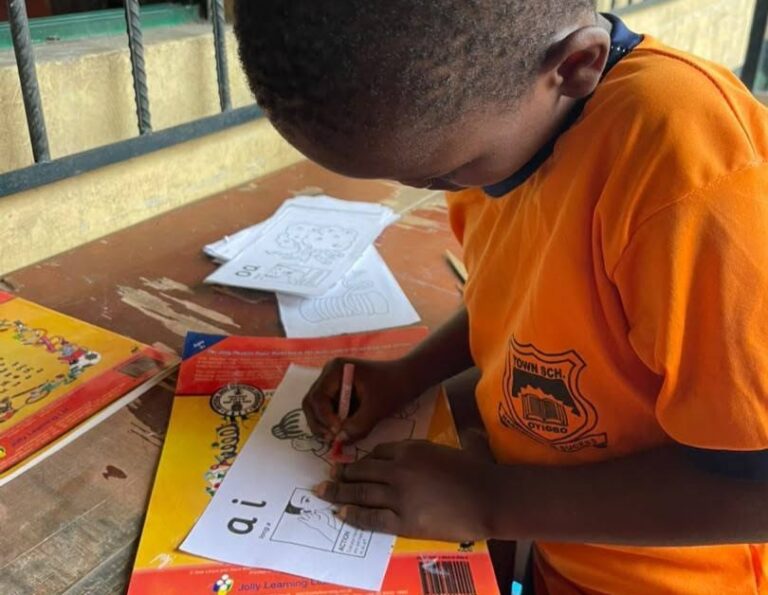
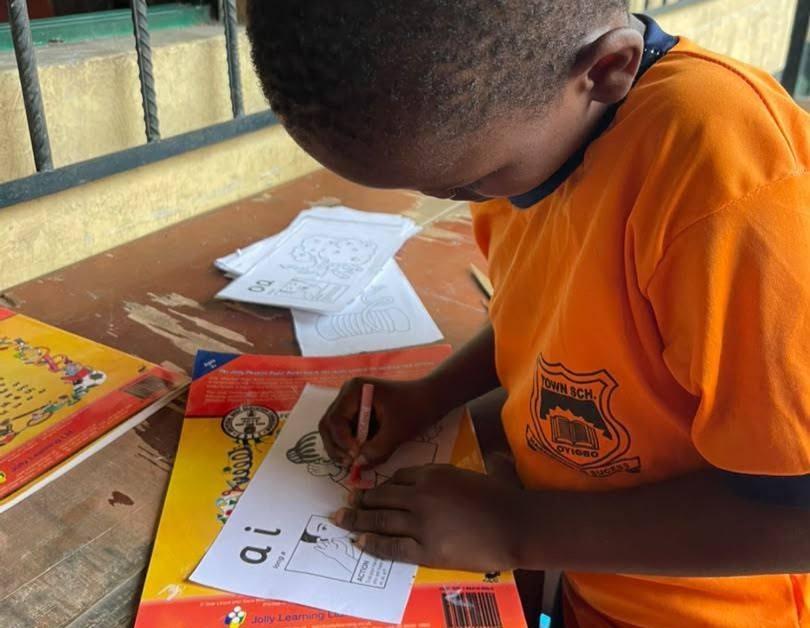
Free education requires community participation to ensure that children from struggling families can access essential school resources.
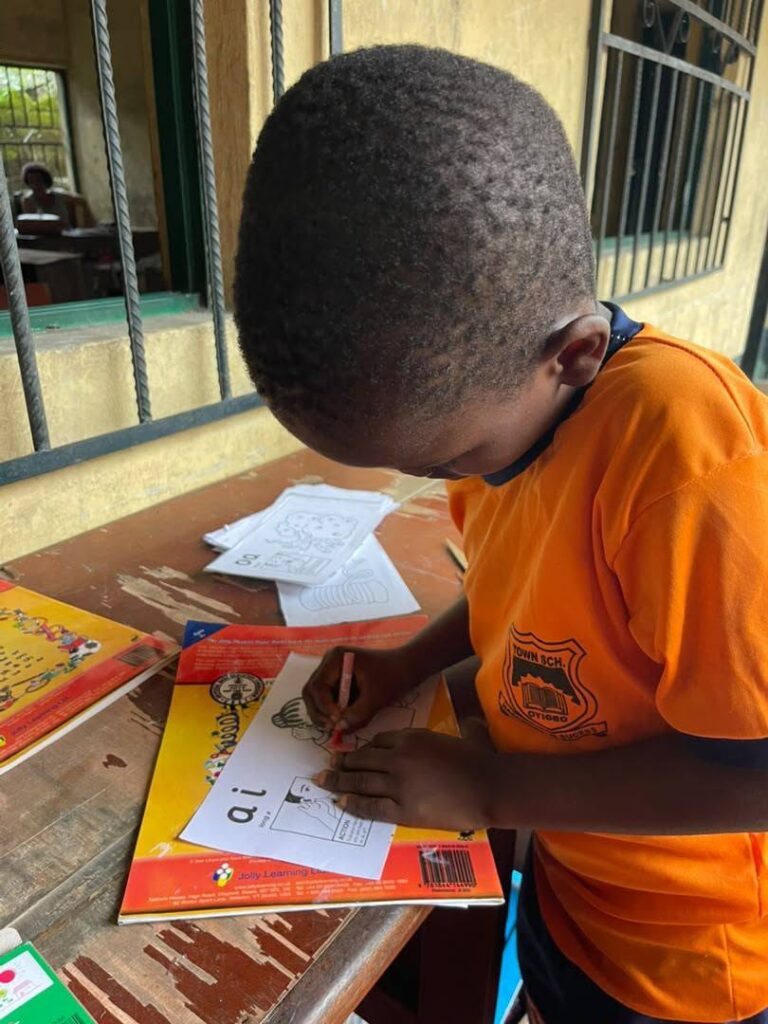
Free education in Abia State is an important intervention in expanding access to schooling, but for some struggling families, the cost of getting a child enrolled and adequately equipped for learning remains a significant challenge.
What happens when education is officially free, yet the cost of basic school requirements continues to keep children out of the classroom?
This is a question that deserves serious attention from government, community leaders, Town Development Unions and well-meaning individuals.
In line with my responsibilities as a Youth Vanguard for Education under the Quality Education Development Associates (QEDA), I recently embarked on a community immersion exercise as part of my commitment to educational development and community service.
During the exercise, something particularly caught my attention. Despite the Abia State Government’s free education policy, some underlying challenges continue to prevent children from fully benefiting from the initiative.
A personal experience brought this reality closer to home.

Free Education, But Who Pays for the Basic Requirements?
While making admission enquiries for a girl I had decided to sponsor into Junior Secondary School 1 (JSS1) at a government-owned secondary school in Ubakala, I was confronted with estimated admission-related expenses of about ₦60,000.
According to the information provided by the school head, a significant portion of the estimated amount would go towards providing basic learning furniture, particularly a locker and stool.
My estimated breakdown of the requirements included:
- Locker and stool.
- 18 exercise books of 60 leaves each.
- 18 exercise books of 20 leaves each.
- School uniform.
- School sandals.
- School bag.
The estimated ₦60,000 may even be insufficient, considering other essential items the child might require.
What makes this situation particularly concerning is that I had previously seen this girl roaming around without attending school. When I made enquiries about her situation, she boldly told me that her family did not have the money to register her.
Think about that for a moment.
A child who should be in school is out of the classroom, not necessarily because there is no government school available, but because her family cannot afford some of the requirements for admission and effective participation in learning.
This raises an important question: If education is free, why should the cost of basic school furniture, learning materials and other admission requirements remain a barrier to accessing it?
Recognising Government’s Efforts While Addressing the Gaps
To be fair, the Abia State Government has made efforts to improve access to education through its free education policy. The abolition of school levies and interventions aimed at strengthening teachers’ capacity to meet contemporary educational standards have tremendously improved the quality and accessibility of education in the state.
These efforts deserve recognition.
However, providing free education and ensuring that every child can practically access and benefit from it are two related but different responsibilities.
Government policies can remove important financial barriers, but some families will still struggle to provide uniforms, school bags, writing materials, basic furniture and other necessities.
Government cannot necessarily shoulder every aspect of educational advancement alone. This is where community participation becomes particularly important.
And this brings me to an important question for our various Town Development Unions:
What exactly are our Town Development Unions contributing to the educational development and welfare of schoolchildren in their communities?
What priorities feature in their meetings, village-square deliberations and end-of-year gatherings?
ALSO READ: Nigerian Bank USSD Emergency Codes: How to Block Your Account If Your Phone Is Stolen
Town Unions Must Make Education a Community Priority
I have witnessed remarkable interventions by Town Development Unions in other communities, particularly in education, healthcare and skills development.
Having personally benefited from similar gestures, I understand the difference such interventions can make in the lives of individuals and families.
I recall occasions when town unions cleared outstanding school fees, paid Common Entrance Examination fees and introduced other educational support programmes to help children from disadvantaged backgrounds.
I have also visited a community secondary school in Oloko, where a friend teaches, and witnessed what meaningful collaboration between government and community development structures can achieve.
The commitment to improving the school environment was evident, and the development efforts provided students with a more encouraging atmosphere for learning.
What about Amaoba in Ikwuano, where community-driven initiatives have included the construction of educational and healthcare infrastructure before handing such facilities over to government for public service?
There are also individuals, including well-meaning sons and daughters of these communities, who provide timely medical and educational assistance, as well as incentives to support vulnerable residents.
These examples demonstrate that communities can achieve meaningful development when they deliberately invest in their people.
Nothing develops a society more sustainably than investing in its human resources.
Small Community Interventions Can Make a Big Difference
Community participation in education does not always have to involve constructing new schools, building laboratories or undertaking multimillion-naira projects.
Sometimes, the most meaningful interventions are relatively modest but directly address the needs of children.
Town Development Unions, for instance, can:
- Support school infrastructure: Provide lockers, stools, desks and other essential furniture to improve the learning environment.
- Recognise academic excellence: Introduce scholarships, awards and incentives to motivate students and encourage healthy academic competition.
- Partner with schools: Work with school authorities to identify vulnerable children and establish practical interventions that address their needs.
These initiatives do not have to be complicated. With proper planning, transparency, and accountability, communities can mobilise resources and make a measurable difference.
Ubakala: There Is Room for Greater Community Participation
Interestingly, I am yet to encounter the kind of structured, community-driven educational interventions I have witnessed elsewhere in Ubakala.
Perhaps there are existing initiatives I am not aware of, and I sincerely hope to be corrected.
However, this observation presents an opportunity for reflection and constructive engagement.
Our Town Development Unions should deliberately consider education and the welfare of schoolchildren as priorities in their community development agenda.
Beyond road construction, social events and other community projects, how much attention are we giving to the children who represent the future of our communities?
How many children are unable to return to school because their parents cannot afford basic learning materials? most particularly the locker and stool
How many talented pupils could perform better if their communities provided the necessary support?
These are questions worth discussing during town union meetings and village-square deliberations.
Education Is a Shared Responsibility
This is a wake-up call to Town Development Unions, traditional institutions, community leaders, philanthropists, corporate organisations and well-meaning individuals to make education and the welfare of schoolchildren a priority.
The objective is not to shift government’s responsibility to communities or undermine the progress already made through the free education policy.
Rather, it is to encourage a complementary approach in which government provides the necessary policy direction and public education services, while communities identify local gaps and mobilise support to address them, or, better still, attract the Government’s attention to these gaps
If we genuinely want more children in school, our communities must become active stakeholders in making education accessible, not merely spectators of government policies.
The question is no longer just what government is doing for education, but also what our communities are doing to complement those efforts.
It is time to invest in our children. It is time to empower our schools. It is time for our Town Development Unions to consider making education a priority. What is a Town Development meeting when the education topic is ignored?
By Osinachi David-Ekwueme
Youth Vanguard for Education, QEDA
About the Author